Moisture Analyzer Selection Guide
Online Moisture Analyzer vs Halogen Moisture Analyzer
Choose by the decision you need to make: online systems continuously measure the process, while halogen analyzers test prepared samples for laboratory quality control and reference work. Many plants need both.
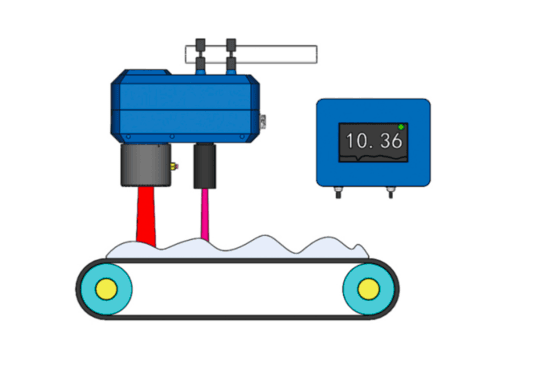
Select an online NIR or microwave analyzer when operators need a live moisture signal from the moving material. Select a halogen analyzer when the laboratory needs a rapid sample result. The two methods complement each other when the online model is calibrated and checked against a controlled reference method.
| Decision factor | Online NIR / microwave | Halogen laboratory analyzer |
|---|---|---|
| Measurement role | Continuous process trend and control signal | Sample-based quality control or reference result |
| Where it measures | On a conveyor, chute, dryer, pipe, or viewing window | On a prepared sample at a laboratory bench |
| Sampling | Observes the moving stream at the installed point | Requires a representative sample taken from the process or batch |
| Response | Seconds or faster, with configurable averaging | One result after the programmed drying cycle |
| Process interruption | Normally none | Material is removed and the sample is consumed by the test |
| Best use | Real-time adjustment, alarms, trending, and reduction of delayed checks | Incoming inspection, product release, method development, and online calibration checks |
| Calibration basis | Paired process samples and a consistent reference method | A validated loss-on-drying method for the actual material |
| Main variables | Material presentation, layer/load, particle size, temperature, environment, and installation geometry | Sampling, preparation, sample mass, heating temperature, end point, and volatile components |
| Output | PLC/SCADA signals and continuous plant data | Displayed result with printer or PC communication, depending on configuration |
| Key limitation | Application accuracy must be proven at the installed measuring point | A small sample may not represent a non-uniform batch or moving stream |
Selection Logic
Match the Instrument to the Operating Decision
Start with the result, timing, and action your team needs. Then confirm the material and method constraints.
Choose Online Measurement
- Operators need a live trend or alarm
- A dryer, blender, dosing step, or other process will use the signal
- Batch or within-bale variation makes occasional samples insufficient
Choose Halogen Testing
- The laboratory needs faster results than a conventional oven
- The decision is based on a prepared sample
- Incoming inspection, release, or method development is the priority
Use Both
- Production needs continuous control and QA needs a reference result
- The online model requires commissioning samples and routine checks
- The plant wants faster investigations without losing method discipline
Frequently Asked Questions
Questions Before You Select a Method
Can a halogen moisture analyzer replace an online moisture analyzer?
It can provide fast sample results, but it cannot continuously observe a moving production stream or provide a real-time control signal. It serves a different measurement role.
Can an online moisture analyzer replace laboratory testing?
Online measurement can reduce routine manual checks, but a traceable reference method is still needed for calibration, verification, investigations, and product-release decisions defined by the quality system.
Is a halogen result the same as an oven-drying result?
Not automatically. Both are loss-on-drying methods, but sample mass, temperature, airflow, end point, and volatile compounds can produce different results. The halogen method should be validated against the agreed reference method.
When should a plant use both systems?
Use both when production needs continuous process feedback and the quality team needs fast, repeatable reference checks. The laboratory method supports commissioning and routine verification of the online model.
Unsure Which Moisture Method Fits?
Send the material, moisture range, current reference method, and a photo or video of the proposed measuring point. Our team will review the practical fit.